
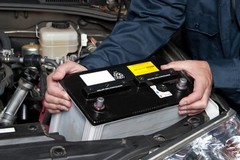
A battery that worked perfectly yesterday can leave you stranded in the driveway this morning, and the culprit is often hiding inside the battery itself. Most car batteries are made up of six individual cells, and when one of them fails, the whole battery can struggle to do its job. Recognizing the symptoms of a car battery with a dead cell early can save you from being stuck at the worst possible moment. At our salvage yard in Weston, we talk with drivers every week who thought their charging system was failing when the real problem was a single bad cell.
Understanding what a dead cell does to your vehicle, how to confirm it, and what your options are afterward can help you make a smart decision instead of an expensive guess. Below, we walk through the warning signs, a few simple ways to test your battery, and the practical paths forward when it is time for a replacement.
What a Dead Cell Actually Does
A standard 12-volt automotive battery relies on six cells wired in series, with each healthy cell contributing roughly 2.1 volts. When all six are working, you get about 12.6 volts at full charge. If one cell shorts out or loses its ability to hold a charge, you lose that portion of the total voltage, and the battery may read closer to 10.5 volts even after a full night on the charger.
That missing voltage matters because your starter motor needs a strong, sudden burst of power to turn the engine over. A car battery with a dead cell simply cannot deliver that burst reliably. The battery might limp along for short trips, then fail completely when the weather turns cold or when the vehicle sits overnight. Unlike a battery that is merely discharged, a dead cell is a physical failure inside the case, and no amount of charging will bring it back permanently.
Warning Signs to Watch For
The symptoms of a failing cell often show up gradually, which is why so many drivers miss them until the battery quits entirely. Paying attention to how your vehicle behaves during startup and while running can tell you a great deal about the health of your battery.
Some of the most common clues include a slow, labored cranking sound when you turn the key, dim headlights that brighten noticeably when you rev the engine, and a dashboard that flickers or resets. You might also notice that your battery needs a jump start more frequently, or that it dies again shortly after you drive. In colder months, a car battery with a dead cell becomes especially obvious because low temperatures reduce the available cranking power even further.
- Cranking that sounds sluggish or drawn out, especially first thing in the morning
- A resting voltage that stays near 10.5 volts even after a full charge
- A swollen or bulging battery case, which can signal internal damage
- A rotten-egg or sulfur smell near the battery, pointing to a venting cell
- Repeated jump starts needed within a short span of days
If you spot a bulging case or smell sulfur, treat it seriously. Those signs often mean the battery is overheating internally and should be replaced rather than charged again.
How to Confirm a Dead Cell
You do not need a shop to get a reasonable idea of what is going on. A basic digital multimeter is affordable and gives you a quick picture of your battery's condition. With the engine off and the vehicle sitting for a few hours, set the meter to DC volts and touch the probes to the terminals. A healthy, fully charged battery reads around 12.6 volts. A reading near 12.0 volts suggests a partial discharge, while a reading around 10.5 volts strongly points to a car battery with a dead cell.
For a more thorough check, many auto parts stores and repair shops offer free load testing. A load tester measures how the battery performs under the kind of demand it faces during startup, which reveals weaknesses a simple voltage reading can miss. If the battery passes a resting voltage test but fails under load, a bad cell is a likely explanation. Before you replace anything, it also helps to rule out a failing alternator or a parasitic drain, since those can mimic some of the same symptoms.
Can You Fix a Dead Cell?
This is one of the most common questions we hear, and the honest answer is that a truly dead cell is rarely worth repairing. Some older-style batteries with removable caps can have their electrolyte levels topped off with distilled water, and in a few cases that addresses a cell that was simply running dry. However, once a cell has shorted internally or the lead plates have deteriorated, no additive or charging routine will restore it to dependable service.
Attempting to nurse a bad cell along usually leads to repeated breakdowns and extra strain on your charging system. The alternator works harder trying to compensate for the weak battery, which can shorten its life as well. In most situations, replacing the battery is the safer and more economical path, especially if the unit is more than three or four years old.
Your Replacement Options
When it comes time to replace a car battery with a dead cell, you have more choices than many drivers realize. A brand-new battery from a parts store is the straightforward route and usually comes with a warranty, but it is not the only option. Quality used and reconditioned batteries pulled from recycled vehicles can offer solid performance at a lower cost, which is where a salvage yard becomes a valuable resource.
At Yaeger Auto Salvage, we handle automotive batteries and a wide range of other parts responsibly, and our approach to recycling and scrap metal keeps usable components out of landfills. If you are shopping for a replacement, you can browse our inventory to see what fits your make and model. We serve Weston and the surrounding areas, and our team can help you match the right battery group size and cold cranking amps for your vehicle so you are not left guessing.
Whichever route you choose, make sure the old battery is disposed of properly. Lead-acid batteries are recyclable, and many retailers and salvage facilities accept them. Handling that core correctly keeps hazardous materials out of the environment and often earns you a small credit toward your replacement.
A car battery with a dead cell does not have to ruin your week. Once you learn the signs, a slow crank, dim lights, repeated jumps, or a low voltage reading, you can act before you end up stranded. A quick multimeter test or a free load test will usually confirm the diagnosis, and from there you can decide whether a new, used, or reconditioned battery makes the most sense for your situation.
If your vehicle has reached the end of the road and a failing battery is just one of several problems, we can help there too. Folks who want to sell cars in Weston and neighboring towns often find that recycling an older vehicle is easier than they expected. Reach out to our team at Yaeger Auto Salvage for guidance on replacement batteries, available parts, or selling a vehicle, and we will point you in the right direction.